
Capability 01
AI-generated strategy-to-task scaffolding
Shortens the path from strategy to execution, reducing senior-team time lost to planning administration and improving readiness for customer-facing campaigns.
Fusebyte connects campaign strategy, execution-ready work, creative delivery, health signals, recommendations, and human-reviewed action in one operating model built for predictable execution.
Walk through the command center, execution health, agent actions, strategic plan, task board, and creative hub to see how Fusebyte connects planning, risk, decisions, and delivery readiness in one operating model.
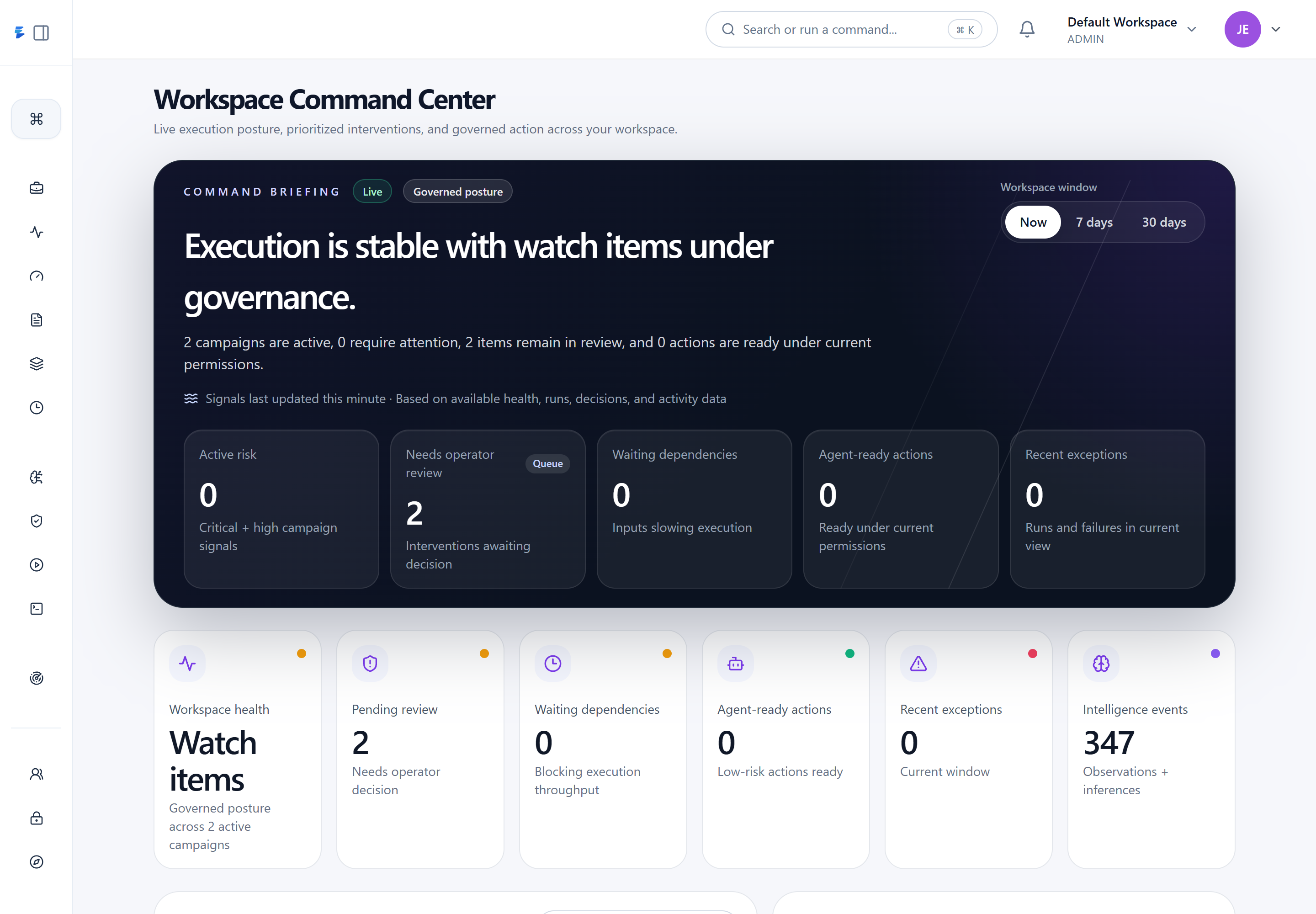
See latest recorded execution posture, prioritised interventions, and governed action across the workspace.
These capabilities turn campaign intent into accountable work, keep execution aligned to the active plan, surface risk earlier, and move teams from recommendation to controlled intervention.
Shortens the path from strategy to execution, reducing senior-team time lost to planning administration and improving readiness for customer-facing campaigns.
Keeps recorded work aligned to the current strategy, reducing duplicated work and the risk of teams executing obsolete tasks.
Surfaces blockers, overdue work, delivery pressure, ownership gaps, and creative risk early enough for teams to intervene before missed launches or escalation costs harden.
Turns recommendations into controlled action paths, reducing decision latency while protecting the business from unmanaged or unsafe automated execution.
Directs leadership attention to the campaigns, blockers, stale governance, and grouped risks most likely to affect timing and delivery confidence.
These capabilities strengthen the operating model around intake quality, creative delivery, ownership, commercial boundaries, and traceable strategic change.
Improves quality at the point execution cost is cheapest to control, reducing downstream rework, unclear ownership, wasted meetings, and late changes caused by incomplete inputs.
Connects creative requests, asset generation, versions, failures, and readiness to campaign execution, protecting launch timing and improving team utilisation.
Makes responsibility and required inputs visible at task level, reducing silent drift, missed handoffs, update chasing, and delivery uncertainty.
Keeps AI-assisted execution within recorded budgets, capacity, entitlement, policy, and approval boundaries.
Makes strategic iteration traceable and exposes when recorded work is still aligned to an outdated strategic direction.
Fusebyte keeps strategy, work, creative delivery, risk signals, recommendations, and governed action connected in one operating layer.
Plans, owners, dependencies, blockers, and delivery risk stay visible before execution drift becomes expensive to recover.
Campaign intent becomes structured plans and current-version tasks without relying on manual translation across disconnected tools.
Creative requests, asset states, retries, reviews, and readiness stay tied to campaign timing and delivery confidence.
Execution health turns blockers, overdue work, stale governance, and delivery pressure into recommended next steps.
Recommendations move through human review, confirmation, and action boundaries so teams can intervene faster without surrendering control.
Review the latest published Fusebyte content selected for teams assessing the product architecture, readiness model, and governed intervention design.
Review how Fusebyte connects campaign planning, task ownership, creative delivery, health signals, and governed intervention across your operating model.